Want Your Flat to Stay Clean? Do These 4 Things Every Day
Keeping a flat clean is rarely about marathon scrubbing sessions; it is about smart systems, quick habits, and knowing when to bring in professional help. In smaller homes, clutter spreads fast, odors linger longer, and neglected corners can make a well-designed room feel tired. A practical cleaning routine protects comfort, supports hygiene, and can even preserve fixtures, fabrics, and flooring. This guide explains how daily actions and cleaning services work together to make upkeep easier.
Outline
- How four simple daily habits reduce mess before it becomes overwhelming.
- What different cleaning services offer, and which ones suit flat living best.
- Why shared spaces and higher-traffic areas may need more formal service standards.
- How air quality tools, smart devices, and realistic budgeting support long-term cleanliness.
- What tenants and landlords should know about move-out cleaning, inspections, and ongoing maintenance.
1. The Daily Four: Small Habits That Keep a Flat Under Control
Most people do not lose control of a flat because they skipped one major cleaning day. More often, disorder grows quietly through a string of tiny delays: a damp sink left overnight, shoes tracking dust past the doorway, yesterday’s packaging sitting on the counter, or bathroom mirrors collecting moisture and residue. In a flat, where rooms are close together and storage may be limited, these small lapses are more visible than they would be in a larger house. That is why daily maintenance matters. It is less about perfection and more about interrupting the cycle that turns mild untidiness into a full weekend project.
A useful daily framework can be built around four actions:
- Reset kitchen surfaces after each meal.
- Dry bathroom fixtures and open a window or use ventilation after showers.
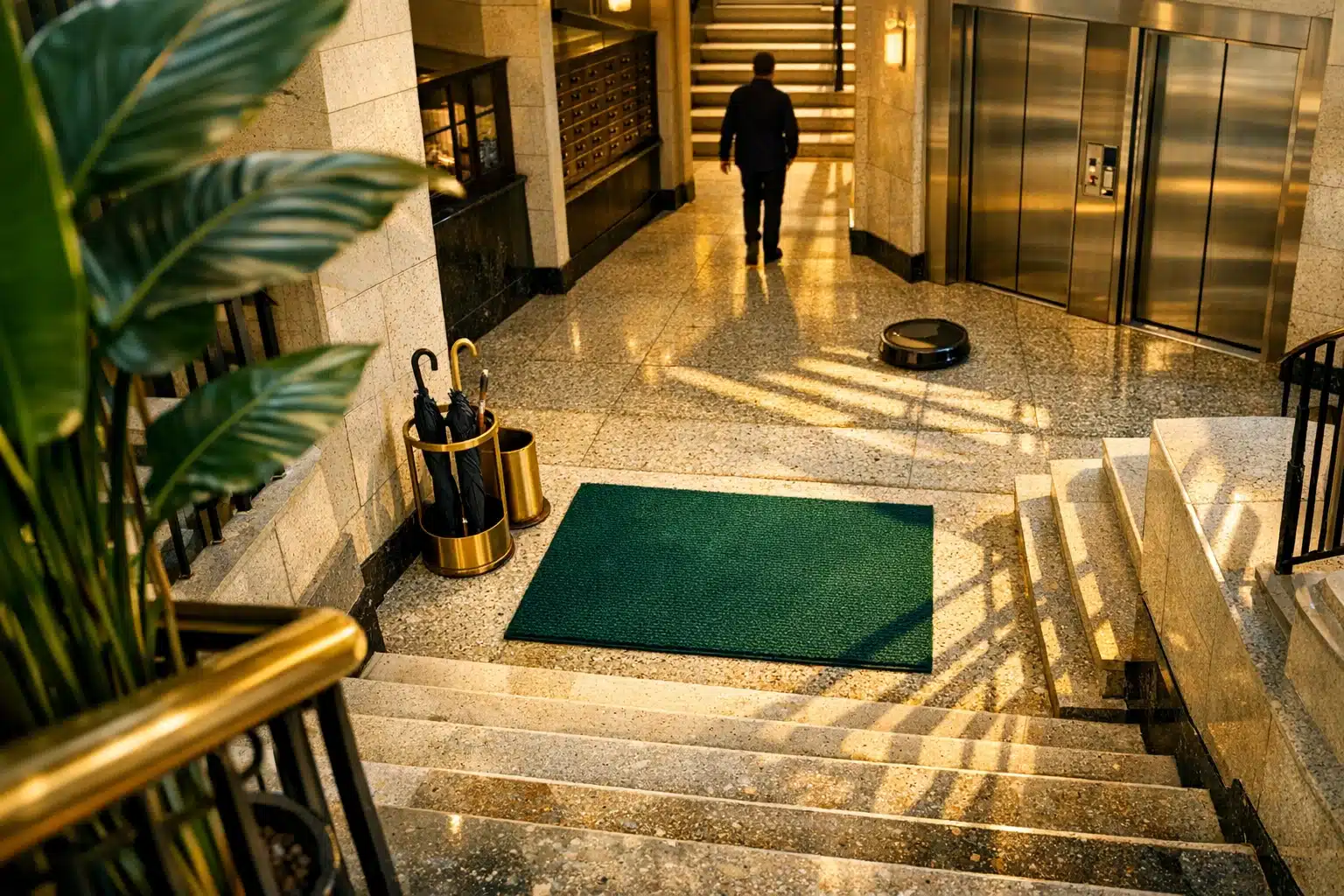
- Contain outside dirt at the entrance with a mat, shoe rack, or tray.
- Do a ten-minute evening reset for clutter, laundry, and rubbish.
These tasks sound modest, but they address the most common sources of household frustration: grease, moisture, dust, and visual clutter. Kitchens benefit from quick wipe-downs because crumbs and splashes attract odors and stains when left in place. Bathrooms stay fresher when condensation is managed early, reducing the chance of mold-friendly dampness. Entry areas are especially important because much of what ends up on floors comes from outside on footwear, bags, and umbrellas. And the short evening reset prevents objects from spreading across tables, chairs, and beds like ivy climbing a wall.
Daily wipe-down routines can support lower upkeep, but a property maintenance contract keeps costs predictable for busy tenants year-round.
That sentence captures a practical truth: routine effort lowers the amount of labor needed later, yet not every renter has the time or energy to maintain consistency every day. Long work hours, commuting, caregiving, or frequent travel can make even basic tidying feel like another unpaid shift. In those cases, simple habits should still come first, but they can be reinforced with scheduled professional support. Think of daily upkeep as the rhythm and professional cleaning as the bassline underneath it. One keeps the flat presentable; the other keeps standards from slipping when life gets noisy.
2. Choosing the Right Cleaning Service for the Way You Actually Live
Not every flat needs the same kind of cleaning support, and one of the most common mistakes is choosing a service based on price alone. A cheaper option that does not match your needs often leads to missed tasks, vague expectations, and frustration on both sides. The better approach is to start with your lifestyle. Do you cook every day? Work from home? Share the flat with a partner, children, or pets? Host guests often? Deal with allergies? Each of these details changes the kind of help that makes sense.
In general, flat cleaning services tend to fall into a few categories. A standard domestic clean usually covers dusting, vacuuming, mopping, bathrooms, and surface wiping. A deep clean goes further, tackling skirting boards, inside appliances, grout buildup, limescale, and neglected corners. A maid service may include recurring visits with a more personalized routine, while janitorial service plans are often more structured, checklist-driven, and useful in buildings or properties that need frequent, reliable attention. For a small flat with predictable needs, weekly or fortnightly support is often enough. For a busy household with high foot traffic, more frequent visits may be worth the added cost.
When comparing providers, ask practical questions:
- Are supplies included, and if so, which products are used?
- Is laundry, dishwashing, or bed changing part of the package?
- How are keys, alarms, and access handled?
- What happens if something is damaged during a visit?
- Are there extra fees for ovens, fridges, or interior windows?
Lock in a recurring janitorial service plan for your flat, and pair it with renters insurance to protect against accidental damage.
That advice is especially useful for tenants who prefer predictable administration over last-minute problem solving. Recurring service plans can simplify budgeting and reduce decision fatigue, while renters insurance may offer peace of mind if there is accidental breakage involving furnishings, electronics, or fixtures. This is not about assuming something will go wrong. It is about building a sensible system in which cleanliness, scheduling, and risk management all support each other. A good cleaning arrangement should feel less like an emergency purchase and more like a calm, repeatable part of modern flat living.
3. Shared Buildings, Home Workspaces, and Why Higher-Traffic Areas Need More Structure
Cleaning a private flat is one thing; managing hygiene in a shared environment is another. Many residents live in apartment buildings with common entrances, lifts, stairwells, mail areas, bin rooms, or laundry facilities. These spaces collect dirt faster because the number of users multiplies the wear. A floor that looks fine in a single-occupancy studio may look worn by midday in a building with dozens of residents passing through. That difference matters because people often judge the cleanliness of a home before they even enter it. A polished hallway, a fresh-smelling entrance, and visibly maintained common surfaces shape perception and comfort immediately.
This is also relevant for people who work from home and receive clients, deliveries, or colleagues. The rise of hybrid work has blurred the line between domestic and semi-professional spaces. If a flat includes a treatment room, consulting area, design studio corner, or frequent meeting setup, ordinary domestic cleaning may no longer be enough. Higher-touch points such as door handles, shared desks, switches, and waiting chairs need more regular attention. In these settings, consistency matters almost as much as appearance.
Upgrade to commercial cleaning services with liability insurance coverage, so routine sanitizing might reduce risk in shared spaces.
Commercial cleaning services differ from basic domestic packages because they are designed around procedures, documentation, and repeatability. They may include scheduled sanitizing, restroom restocking, communal floor care, rubbish management, and service logs. Liability insurance coverage adds an extra layer of reassurance for property managers, co-living operators, and residents’ associations, especially where multiple users and common assets are involved. It does not guarantee a spotless world, but it does make responsibility clearer if accidents occur.
Here are situations where stronger service standards usually make sense:
- Buildings with heavy daily foot traffic.
- Flats used partly for client-facing work.
- Co-living arrangements with shared kitchens and bathrooms.
- Properties with elderly residents or people more sensitive to poor air quality and surface contamination.
The key idea is simple: the more people touch, share, and move through a space, the less effective casual cleaning becomes. In low-traffic homes, light routines may hold the line. In communal settings, structure wins. A checklist, a schedule, and a trained cleaner are often more useful than good intentions floating around a group chat.
4. Clean Surfaces Are Only Part of the Story: Air Quality, Tools, and Smart Budgeting
A flat can look tidy and still feel stale. That is because cleanliness is not just about what you can see on shelves and floors. Air quality, humidity, dust circulation, and filtration all shape how a home feels day to day. If you have ever walked into a room that appeared neat but somehow seemed heavy, musty, or irritating to breathe in, you already understand this difference. The hidden layer of cleanliness often lives in the air, in soft furnishings, and in the way a space handles moisture and particles.
Several tools can make a visible difference over time. A vacuum with effective filtration helps capture fine dust instead of pushing it back into the room. Washable doormats reduce the dirt that enters in the first place. Dehumidifiers can help in flats where condensation gathers around windows or inside wardrobes. Air purifiers may be useful in homes affected by traffic pollution, pet dander, cooking odors, or seasonal allergens. Robot vacuums do not replace deep cleaning, but they can maintain flooring between more thorough sessions, especially in households with pets or busy schedules.
Consider a subscription maid service plus smart home air filtration, and budget with a home improvement loan if upgrades are needed.
That suggestion will not suit everyone, but it reflects a broader principle: sometimes the most effective cleaning strategy is a mix of labor and infrastructure. If a flat has old extractor fans, poor ventilation, damaged flooring that traps grime, or built-in storage with persistent damp issues, cleaning alone may never fully solve the problem. In those cases, modest upgrades can support better results. Of course, borrowing should be approached carefully and only when the improvement is necessary, affordable, and clearly useful. A smaller step, such as replacing a weak vacuum, sealing gaps around windows, or adding better storage, may be enough.
Think of it this way:
- Cleaning removes what is already there.
- Better tools reduce the speed at which mess returns.
- Home upgrades fix the conditions that make cleanliness harder to maintain.
When these three layers work together, a flat becomes easier to manage rather than simply easier to clean once. That distinction matters. One is reactive. The other is strategic. And strategic homes tend to stay calmer, fresher, and more livable with less repeated effort.
5. Final Takeaway for Tenants and Landlords: Turnovers, Expectations, and Long-Term Value
Cleaning matters most when someone is about to judge the condition of a property. For tenants, that moment often comes at move-out. For landlords, it arrives during inspections, new tenancies, and deposit discussions. A flat that seemed manageable during daily life can suddenly reveal built-up grease behind the hob, dust on extractor covers, soap residue in shower tracks, and marks on skirting boards once furniture starts moving. This is why turnover cleaning is its own category. It is not the same as routine upkeep, because the goal is not just comfort. The goal is to return the property to a clearly documented standard.
For landlords, a tenant turnover cleaning package and security deposit insurance can streamline move-out inspections and dispute costs.
That combination can help because it separates emotion from process. Cleaning packages built for turnovers typically follow a room-by-room checklist and focus on details that matter in handovers: appliance interiors, cabinet fronts, bathroom descaling, floor edges, windows, and rubbish removal. Security deposit insurance, where available and appropriate, may reduce the friction that can arise when repair, cleaning, and tenancy timelines collide. For tenants, professional turnover cleaning can also be a defensive tool. It creates a record that the flat was returned in a reasonable condition, which may help reduce disagreements over whether cleaning issues are normal wear or neglect.
Whether you are renting or letting, expectations should be specific rather than assumed. Useful documentation includes:
- A move-in inventory with dated photos.
- A written cleaning checklist for move-out.
- Notes on appliances, stains, and pre-existing wear.
- Clear communication about who handles specialist tasks such as carpet or upholstery cleaning.
For the everyday resident, the lesson is reassuringly simple. You do not need to scrub constantly to live well in a flat. Start with daily habits that prevent buildup, add professional help where your schedule or building demands it, and use better tools when the environment itself makes cleaning harder. For landlords, consistency beats guesswork: regular standards, documented expectations, and proper turnover support usually save time and reduce conflict. A clean flat is not just a nicer place to sit down at the end of the day. It is an easier place to manage, protect, and hand over with confidence.